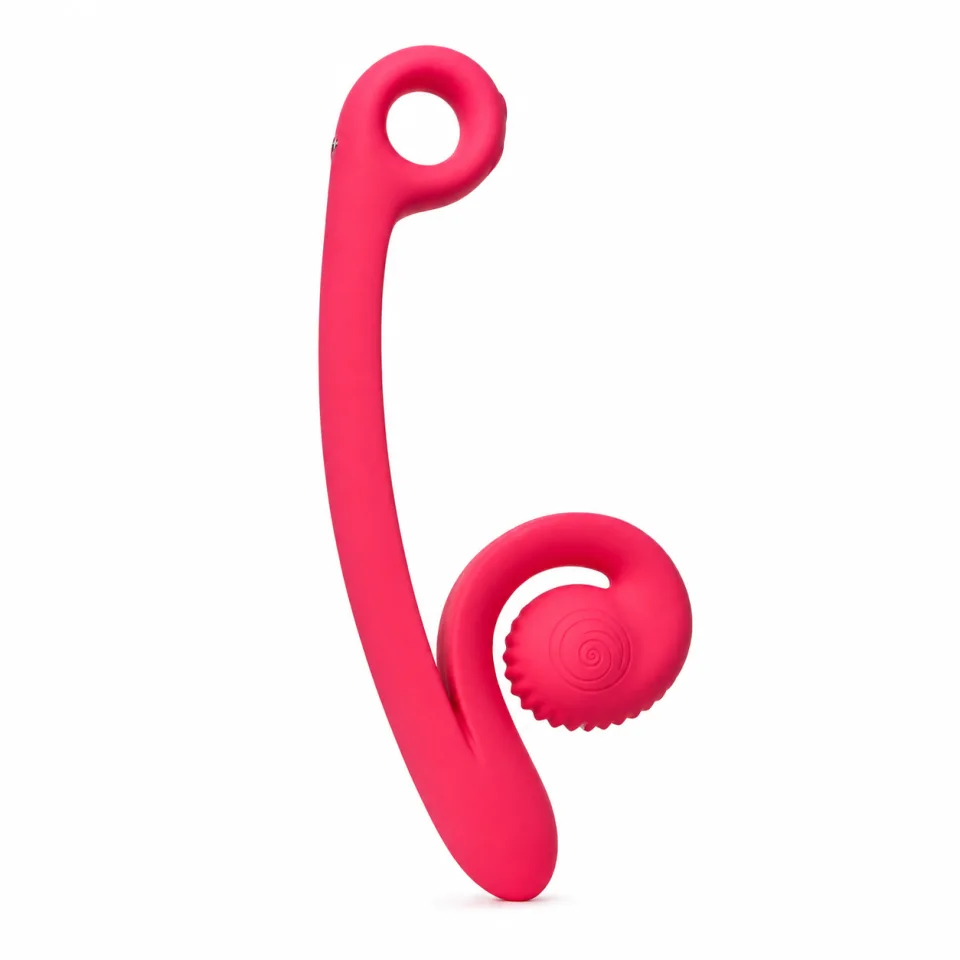
The reason I'd consider LELO SORAYA Wave over SVibe Snail Curve is its motor-driven internal movement.
If that movement isn't something you want, I'd be reluctant to pay extra just for a more elaborate specification.
Curve gives me a different reason to look closer: a loop handle and separately controlled contact areas.
This choice starts with the action you're buying, not the more expensive name.
I reviewed specifications and public customer accounts for this comparison on 18 October 2026; I haven't personally tested these products.
This article was commissioned by SVibe, with both products assessed on their stated features and the available evidence.
What the word Wave changes
SORAYA Wave isn't another name for SORAYA 2.
The Wave model adds a moving internal arm alongside vibration.
That distinction is the centre of this comparison.
Choosing it because you liked a review of a different SORAYA would leave the most important feature unexplored.
I'd separate movement outside the body from powered movement inside it.
Curve has a rounded external head that rolls with body movement.
SORAYA Wave uses WaveMotion to move its internal arm.
Those mechanisms act in different places and shouldn't be treated as interchangeable.
Neither answer is more sophisticated.
They're preferences, and it's perfectly reasonable to want one without the other.
Mechanical movement also makes the shape especially relevant.
A product can have an appealing motion on a demonstration video yet still need a comfortable starting position.
I'd look at where the arm moves relative to the external contact area.
I wouldn't assume that movement fixes an unsuitable fit.
That assumption could turn an expensive feature into something you leave switched off.
Price and feature comparison
The two dollar amounts below refer to different sellers in the United States.
They are a dated reference, not a promise about your checkout price or a global price ranking.
Scroll sideways to see every column →
| Detail | SVibe Snail Curve | LELO SORAYA Wave |
|---|---|---|
| Inspected price | US$149 at SVibe | US$259 at Nordstrom |
| Main distinction | Rolling external head and separate motor controls | Vibration plus motor-driven internal waving motion |
| Shape to inspect | Loop handle and external arm | Moving internal arm and external contact |
| Stated charge / runtime | About 2 hours / about 1 hour | About 2 hours / up to 2 hours |
| Buying condition | Check the seller's return terms before opening | Inspected Nordstrom listing says final sale |
The official SORAYA Wave specification is my source for the model's construction and battery claims.
I keep that separate from the retailer's price and return conditions.
Otherwise it's easy to combine a manufacturer's warranty, another shop's discount and a third shop's return policy into an offer that doesn't actually exist.
Where I'd give Curve the advantage
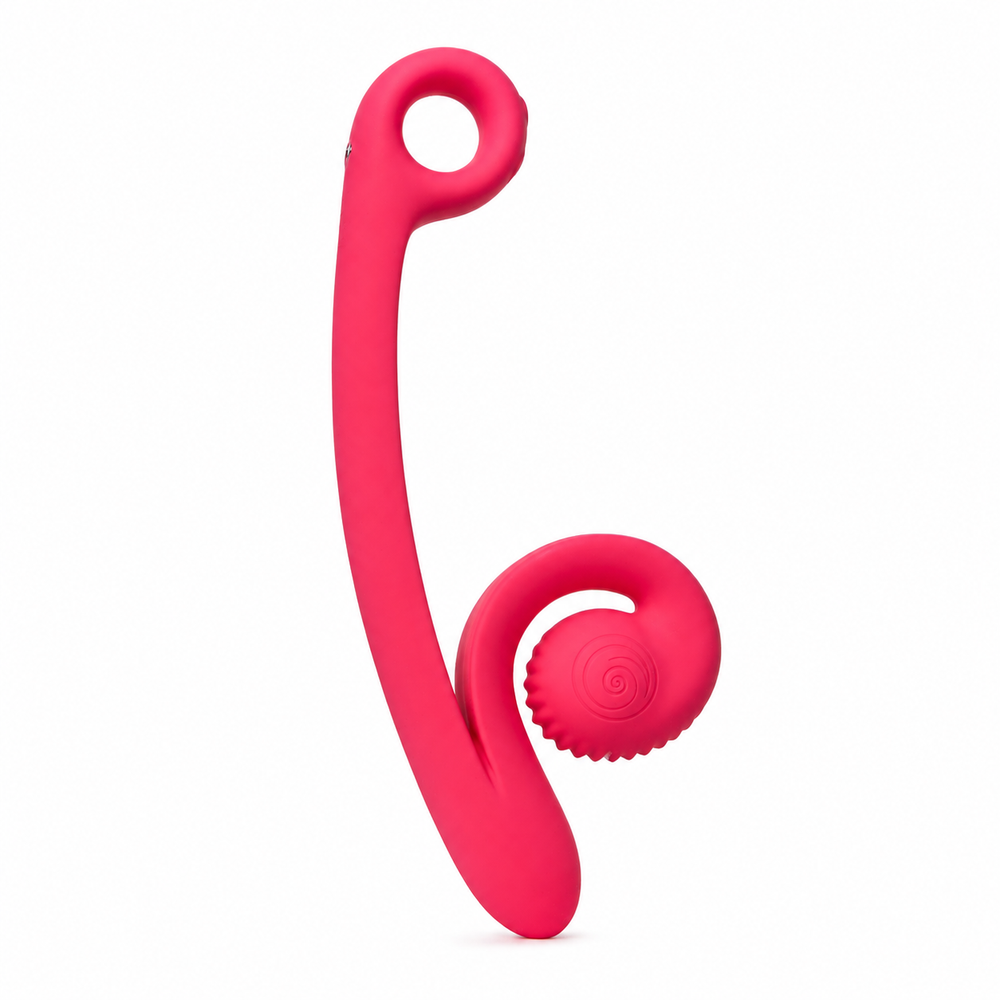
Curve looks more relevant to me when the goal is straightforward control over two contact areas.
Its handle creates a clear place for the hand.
That may appeal if you dislike gripping a broad, smooth body while also searching for buttons.
I'd still check the button position carefully; a handle isn't automatically convenient for every hand.
I also see a sensible argument for avoiding an extra mechanical function you haven't asked for.
You don't have to buy every available movement to get a considered upgrade.
If you want internal vibration without a powered waving arm, that preference deserves more weight than an extra movement function.
The shorter feature list may be the better match for how you intend to use the device.
What I wouldn't do is call Curve a low-cost copy of SORAYA Wave.
That would suggest the same experience for less money, which the designs don't establish.
The lower inspected price buys a different mechanism.
It's a saving only if that different mechanism is the one you'd rather have.
Where the Wave feature could justify the premium
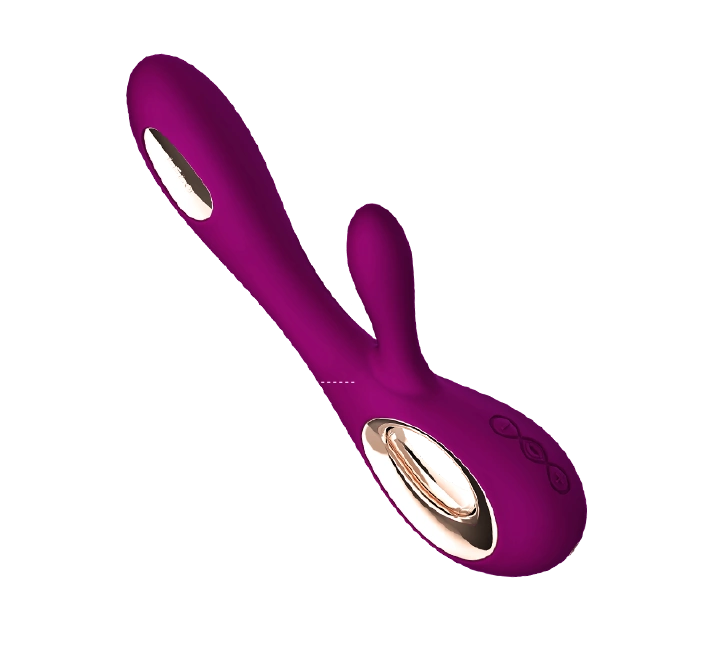
I'd consider SORAYA Wave if deliberate mechanical movement is already on your shortlist.
Perhaps you've been comparing moving designs and want vibration as part of that purchase.
In that case, the extra function isn't decorative.
It answers a requirement that Curve doesn't meet in the same way.
The controls deserve a little patience before checkout.
I'd read how movement and vibration are selected rather than assume every combination I imagine is available.
Two motors or several modes don't necessarily mean unlimited independent adjustment.
The useful question is whether the actual combinations match the ones you want.
I wouldn't use the advertised runtime to judge the strength of the motion, either.
Battery endurance and perceived intensity are different things.
A longer stated runtime can make charging less frequent, but it doesn't establish that one product is more satisfying.
That part remains personal, even when the technical comparison is detailed.
The owner comments I'd pay attention to
In the Best Buy reviews for SORAYA Wave, Paul praises the quality and charging while noting that the controls took some learning.
Best Buy labels that account as both a verified purchase and an incentivized review.
I include it as one person's observation, with that incentive in view.
It isn't independent proof that the controls are easy or that the product will last a particular number of years.
That learning point matters to this comparison.
A device with more than one kind of action gives you more to understand.
I'd want to be comfortable selecting the basic function before treating the extra modes as a benefit.
If you dislike remembering control sequences, read the manual before buying rather than hoping the interface will feel obvious later.
On SVibe's Curve page, Rachel Szmyd describes becoming happier with the product after learning how to use it.
Alora Aldrige also gives a positive overall account but raises practical complaints about buttons and cleaning.
Those seller-hosted comments stop me from presenting Curve as effortless simply because its mechanism is less elaborate.
Simple in concept and easy for every owner aren't the same claim.
I'd use these accounts to form questions, not predictions.
Can I understand the controls from the manual?
Do I like the grip enough to accept the design's cleaning details?
Am I buying a movement I actually want to explore?
The buyer comments help make those questions specific without answering them on your behalf.
Buying conditions could change my choice
The inspected Nordstrom SORAYA Wave offer is marked final sale.
That would make me more cautious about buying mainly to discover whether I like its shape.
I'd read the exact product conditions rather than rely on the store's general return reputation.
A generous policy for clothing doesn't automatically apply to an intimate product.
For either model, I'd also establish who handles a fault.
Is the first contact the retailer or the manufacturer?
What proof of purchase do they need?
Where would a replacement be sent?
I wouldn't count a long-running quality programme as years of free replacements without reading what it actually provides.
If you're ordering outside the United States, the price table is only a reference point.
Confirm that the seller serves your address before comparing totals.
Currency conversion, shipping and local charges can change the difference between the two.
I haven't verified a delivered price for every country, so I wouldn't describe either as the cheapest local option.
Which would I choose for each priority?
For someone who already likes dual vibration and wants a more deliberate grip, I'd begin with Curve.
I'd compare the loop and button placement against the device they already use.
That gives the purchase a clear purpose.
It's easier to judge a change when you can name the problem you're trying to solve.
For someone specifically seeking a moving internal arm, I'd focus on SORAYA Wave.
Curve wouldn't satisfy that requirement merely because it's also a dual design.
I'd then compare the Wave controls and dimensions with other moving models, rather than declare the category search finished.
Wanting mechanical movement is a reason to investigate it, not a reason to skip the fit questions.
For a surprise gift, I'd be more conservative with both.
Neither price nor packaging tells me the recipient wants internal contact or mechanical movement.
I'd rather agree on the format together than turn the purchase into an expensive guess.
Our couples buying guide is useful for that conversation because it separates several very different designs.
Are they worth it?
My answer depends on whether the Wave action would earn its place in your routine.
If it would, SORAYA Wave offers a concrete reason to spend more at the inspected prices.
If it wouldn't, Curve's grip and direct control make a more relevant starting point.
Neither earns a universal score from specifications alone.
I'd also keep the broader vibrator comparison open if you aren't settled on a dual design.
The best next step may be changing the format you're comparing.
I'd rather make that small detour now than buy an elaborate mechanism whose main feature never interested me in the first place.
For a couple considering a wearable ring instead of either rabbit, Snail Jovi would make my shortlist.
I can see the appeal of keeping control on a separate physical remote.
Melissa Medeiros reports a positive experience using Jovi with her husband.
I'd also take the reported delivery waits seriously.
For me, confirming arrival timing and a suitable fit would be part of choosing it.