
For a long-distance relationship, I’d start with the connection, then choose the shape.
A brilliant vibrator with a short-range handset won’t let a partner in another city change its settings.
My shortlist starts with Lovense Lush 3 for an internal wearable, We-Vibe Chorus Pro for couples who also spend time together, and SVibe Twinn for an external alternative.
They solve different problems, which matters more to me than picking one winner for everybody.
This is my analysis of product documentation and attributed reviews checked on October 24, 2026.
I haven’t physically tested these models.
SVibe’s inclusion is part of this commissioned editorial comparison; the choices below explain where it fits and where it doesn’t.
What I mean by long-distance control
The toy connects to a nearby phone, and the couple connects through the app over the internet.
That local phone still needs to stay within the toy’s Bluetooth range.
The other partner can be far away, but a product advertised as “Bluetooth” doesn’t automatically support that arrangement.
I looked for explicit partner-control or distance functionality rather than assuming it from a wireless logo.
I also separated control from movement.
An app can adjust a motor without repositioning the toy for you.
If you dislike its shape when using it alone, a video call probably won’t change that.
For a broader comparison of the two main ecosystems, see my SVibe versus Lovense analysis.
Compare the ten options
These are observed US storefront prices, checked October 24, before destination-specific shipping or taxes.
The names link to the specifications behind each entry.
Prices marked “from” depend on the selected option, and an advertised price doesn’t establish stock in your country.
The order reflects different use cases, not a laboratory performance score.
Scroll sideways to see every column →
| Model | Reference price, USD | Format | Remote connection | My main consideration |
|---|---|---|---|---|
| Lovense Lush 3 | $119 | Internal egg | Lovense app | Choose this exact generation |
| We-Vibe Chorus Pro | From $229 | Internal/external wearable | App; local squeeze remote | Useful when together too |
| SVibe Twinn | $89 | External contact | App on Lilac and Teal only | Cherry has no app |
| We-Vibe Sync 2 | From $169 | Internal/external wearable | App; local controls | Fit comes before connectivity |
| We-Vibe Moxie+ | From $149 | External underwear attachment | App and local remote | Fabric and positioning |
| We-Vibe Nova 2 | From $159 | Handheld dual vibrator | App and buttons | Someone still guides it |
| We-Vibe Jive 2 | $139 | Internal egg | App and local remote | Confirm current stock |
| We-Vibe Wand 2 | $169 | External wand | App and buttons | Larger contact surface |
| Lovense Nora | Check selected offer | Rabbit with rotation | Lovense app | Rotation is a separate preference |
| We-Vibe Ditto+ | From $139 | Anal plug | App and local remote | Only for an intended anal purchase |
1. Lovense Lush 3: my starting point for an internal wearable
Lush 3 makes sense to me when the person wearing it already likes internal vibration.
Lovense documents app control and partner interaction, so the connection is part of the product rather than an accessory added afterwards.
I’d shortlist it for a couple who want one person to wear a toy while the other changes the settings.
The generation deserves attention.
The same website promotes Lush 4 and other products around the Lush 3 listing.
I wouldn’t compare a sale price for one generation with specifications from another.
Before ordering, I’d save the model name shown in the basket and check that both phones can run the current app.
That small check is more useful than buying whichever listing has the biggest crossed-out price.
2. We-Vibe Chorus Pro: for time together as well as apart
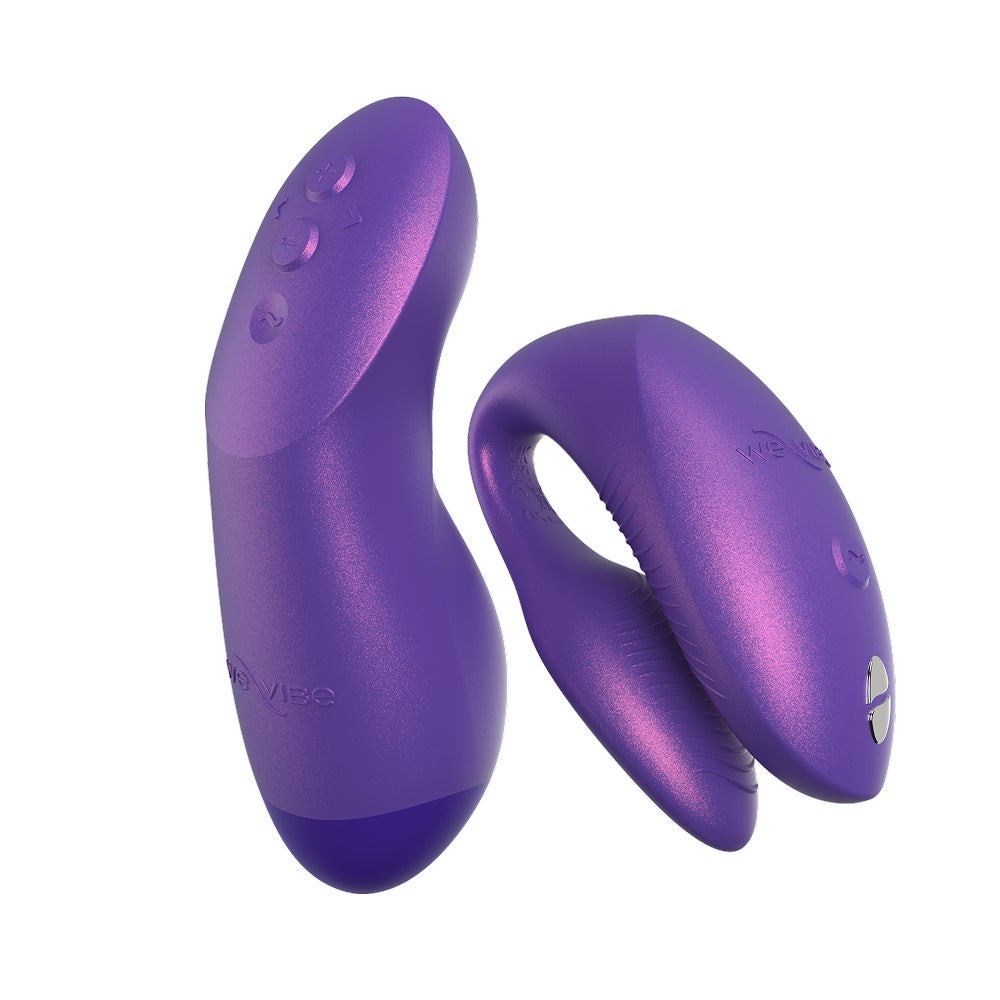
Chorus Pro appeals to me when the couple want an app-connected wearable and a physical controller for visits.
Its squeeze remote adjusts intensity locally, while the We-Vibe app provides distance control.
The charging case is another practical distinction if keeping the toy and handset together matters to you.
At $229, I’d want those extras to earn their place.
If most of your use will be solo with a partner controlling the app, the handset may spend plenty of time in the case.
I’d also look carefully at the internal-and-external shape.
It’s a different purchase from a small external vibrator, regardless of how attractive the control features sound.
3. SVibe Twinn: the external option I’d check by color
Twinn is interesting because its two rounded contact points offer an external format rather than another insertable egg.
That gives it a distinct place in this shortlist.
The official page expressly limits app connectivity to Lilac and Teal; Cherry doesn’t include it.
I’d treat the color selection as a functional specification, not just a style choice.
Its listed battery estimate is around one hour, depending on the setting.
I’d plan charging around that rather than assuming it will last through several calls.
The product page’s buyer comments are mixed: Dominika describes difficulty keeping it positioned, while Maybelle Gruber is positive about her experience.
Those are store-hosted reports, not my tests or a prediction of your fit.
They make placement the question I’d investigate first.
4. We-Vibe Sync 2: a simpler wearable comparison
Sync 2 is the model I’d compare directly with Chorus Pro before paying for the latter’s extras.
It has an adjustable fit and app control, with a lower displayed starting price.
The attraction is having a wearable that can remain useful when you’re in the same room again.
I wouldn’t describe adjustability as a guarantee that it fits everyone.
The internal arm, external contact and space around the toy still have to suit the wearer.
If that person would rather avoid internal use entirely, Moxie+ or Twinn is a more relevant comparison.
For me, eliminating an unsuitable shape early is better than spending an evening comparing vibration patterns.
5. We-Vibe Moxie+: for external placement in underwear
Moxie+ uses a magnetic attachment, which is a meaningful difference from a handheld external vibrator.
We-Vibe lists both a remote and app control.
I like having those two options, particularly when you want to try the basic controls together before relying on a phone connection.
The purchase question is whether you actually want an underwear-mounted format.
Fabric thickness and positioning become part of the experience, so I wouldn’t assume every garment works equally well.
I’d try the placement privately before planning a shared call around it.
A stable connection and a comfortable position are separate things; neither one fixes the other.
6. We-Vibe Nova 2: when handheld control is a positive
Nova 2 combines an adjustable internal arm with an external arm, and the app can change its vibration settings over distance.
I’d consider it if the wearer wants to guide the movement personally while sharing intensity control with a partner.
That division can be much more appealing than trying to make everything hands-free.
The distinction matters because a remote partner can’t feel where the toy is resting.
Keeping movement under the wearer’s control makes the arrangement easier to understand.
If you’re deciding between this shape and SVibe’s curled design, our Curve versus Nova 2 comparison explores that separate question.
I’d choose the preferred shape first and the connection features second.
7. We-Vibe Jive 2: another egg, with a local handset
Jive 2 is worth comparing with Lush when a physical remote is also on your wish list.
Its official page lists manual, remote and app operation.
The adjustable tail is another detail I’d inspect in the product photographs before deciding whether the outline appeals to me.
The US page showed a notification option during my check, so I’d confirm availability before making plans around a delivery date.
I wouldn’t quietly replace it with the original Jive either.
Similar names can conceal a different controller or specification.
For a gift, I’d send the exact model link and let the recipient confirm that they want this format.
8. We-Vibe Wand 2: for broad external contact
Wand 2 belongs here because internet control doesn’t have to mean a tiny wearable.
Its larger head and handle suit a different preference from an egg or a small contact vibrator.
I’d shortlist it for someone who already knows they enjoy a wand and wants to share the controls.
The tradeoff is size and handling.
Someone still needs to position it, and a broad head offers a different kind of precision from a narrow tip.
I’d avoid buying a larger wand purely because it sounds more powerful.
A familiar, manageable shape would matter more to me during a call than the promise of extra intensity I might never want.
9. Lovense Nora: for people who specifically want rotation
Nora adds a rotating internal component to its external vibration.
That makes it a more specific choice than “an app-controlled rabbit.”
I’d put it on the shortlist only if that movement is something the recipient actively wants to explore.
I wouldn’t assume that owning another Lovense toy means Nora will feel familiar.
The app may be familiar, but the mechanism and shape are different.
For a couple already using the brand, the shared control environment is a reason to investigate it, not a reason to skip the fit questions.
I’d also check the exact single-product offer, since the page displays several bundles alongside it.
10. We-Vibe Ditto+: the anal-specific option
Ditto+ has its own place because it is designed as an anal plug, with app and physical remote control.
I’d consider it only when that is the category the wearer has chosen.
It isn’t a substitute for an external vibrator or an internal vaginal egg.
The official specification lists a 90-minute charge and 120-minute runtime.
Those are manufacturer figures, not results from my own battery test.
I’d read its instructions and dimensions before comparing the app with other models.
The person wearing it should always be able to stop or change the settings themselves, even when a partner has been invited to control it.
What I’d check before the first call
I’d pair the toy locally, check the stop control and send a partner invitation before the planned call.
Then I’d test the connection from separate networks.
That distinguishes a local Bluetooth pairing from the internet feature you actually bought it for.
It also leaves time to resolve permissions or an app update without turning the evening into tech support.
Glamour’s long-distance guide brings together several formats, which supports a useful buying principle: the remote feature doesn’t replace personal preference.
I wouldn’t carry an older reviewer’s verdict over to a newer generation without checking the changes.
Finally, I’d compare the delivered price and the seller’s return conditions for the recipient’s country.
A US promotion doesn’t establish international shipping cost or an arrival date.
My choice would be the model the wearer wants to use independently too.
That way, the purchase still makes sense when schedules don’t line up.